Cover pages and real multi-page structure
A proposal isn't a one-page price list. Open with a branded cover page, then build as many pages as the pitch needs from text, tables, galleries, and signature blocks.
Proposal software
Cover page, scope, proof, pricing, signature — ExtraflowDoc builds every part of the proposal from reusable blocks, inside the CRM where the deal already lives. No design tool, no separate e-signature subscription, no per-seat bill.
Free plan available. No credit card required. Or build a proposal right now with no sign-up.
Features
A proposal has to explain, prove, price, and close. These are the blocks it's built from — all in one editor, on one document.
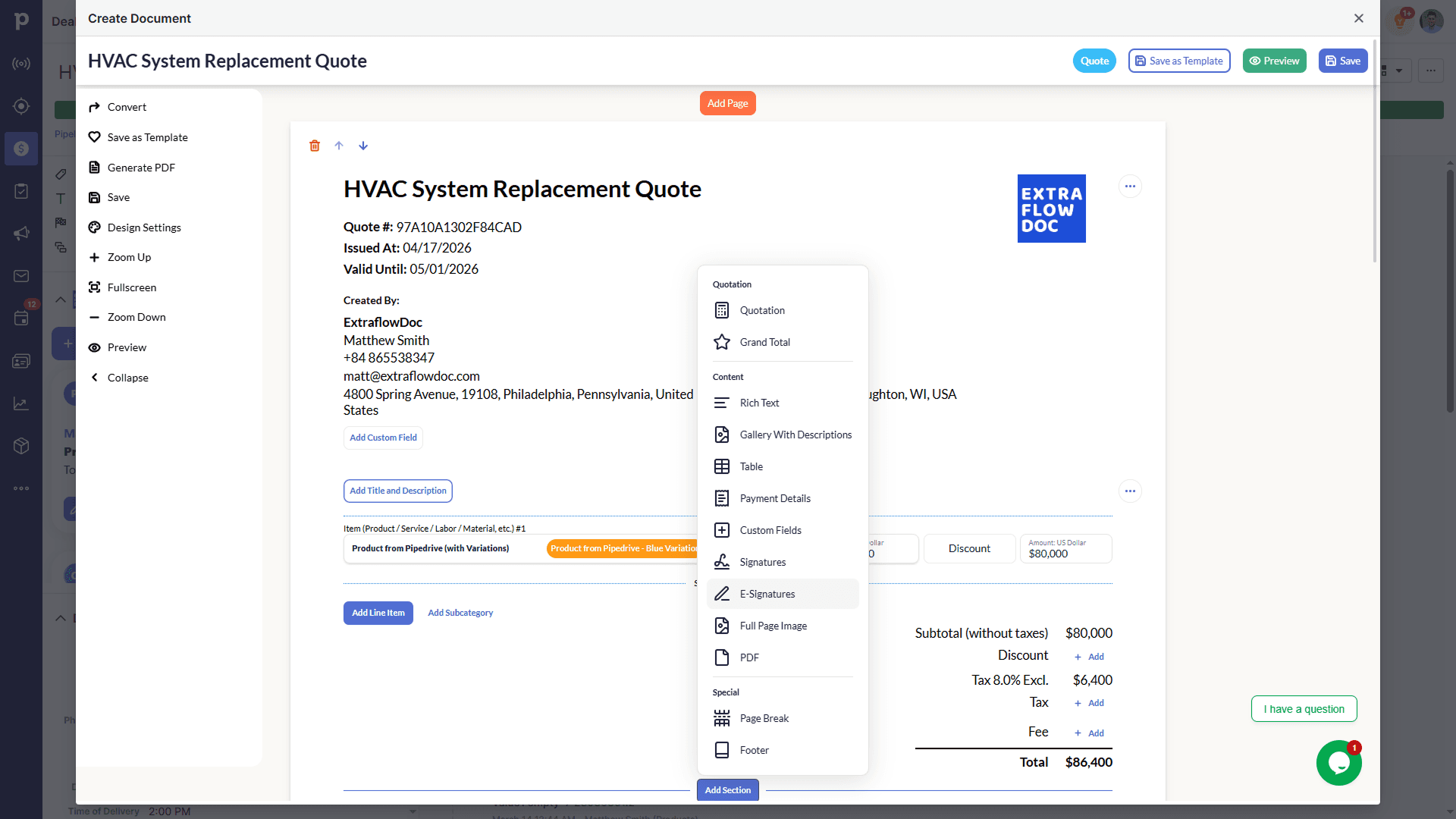
A proposal isn't a one-page price list. Open with a branded cover page, then build as many pages as the pitch needs from text, tables, galleries, and signature blocks.
Rich text sections let you explain what you'll do, how, and in what order — the part of the proposal that justifies the number further down.
Drop in past projects, site photos, or product shots with captions. Clients buy the evidence as much as the estimate, especially on bigger jobs.
Contact details, company information, the assigned rep, and any custom field you map flow from the CRM record into the proposal. No retyping, no stale client names.
Add line items from your catalogue, price them directly or from cost plus markup or a target margin, and lay out good/better/best options with totals that recalculate as you edit.
Save a winning proposal as a template — cover, scope, terms, and pricing structure included — so the next one takes minutes and every rep sends the same standard.
Send the proposal for signature and collect a legally recorded acceptance with a full audit trail, without buying a separate e-signature subscription.
Share a secure link your client opens in the browser, export a print-ready PDF, and watch the document's status change as it moves from sent to signed.
ExtraflowDoc opens in the deal or board your team already works in, so the proposal lives with the opportunity instead of in someone's downloads folder.
See the transformation
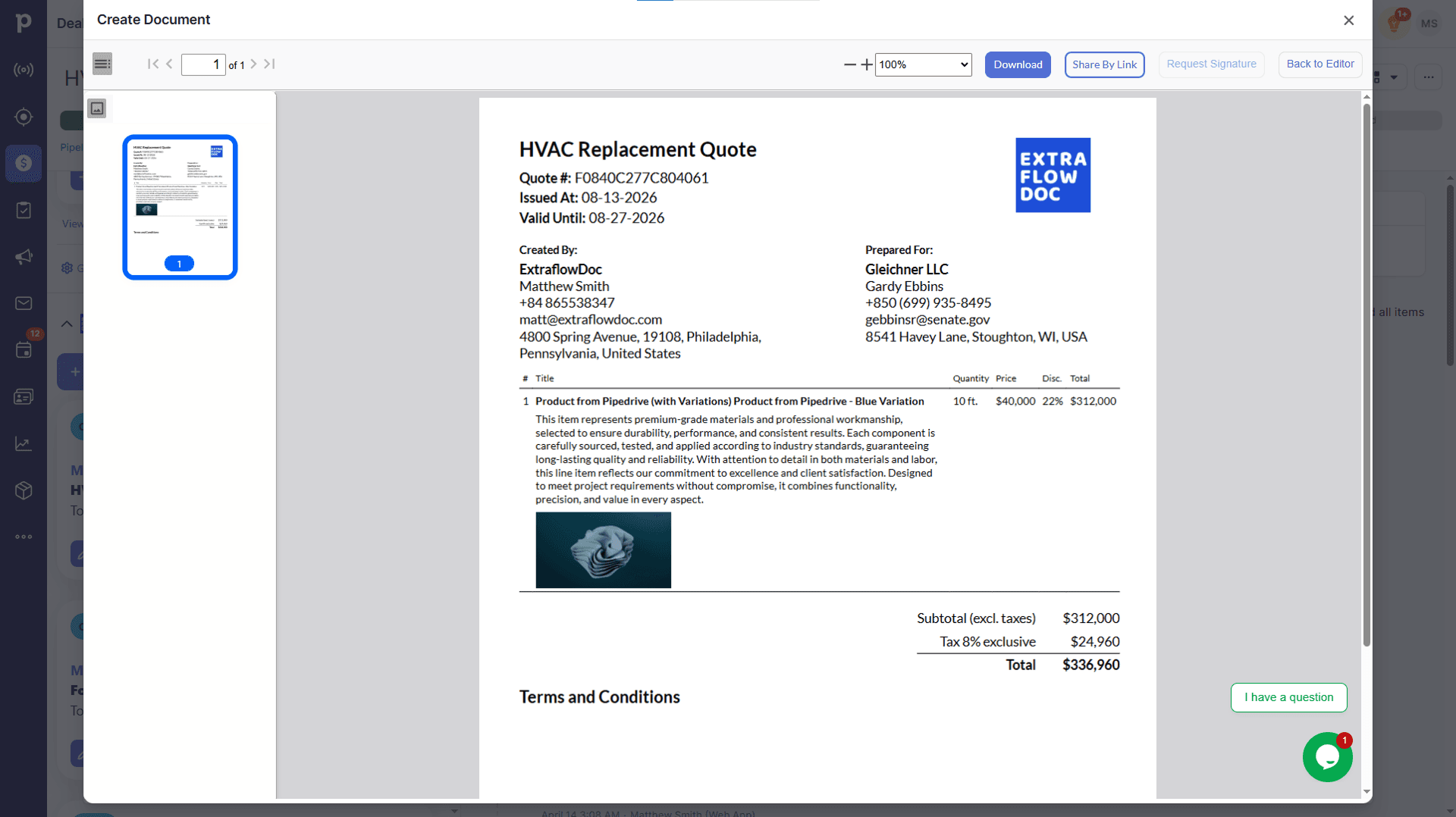
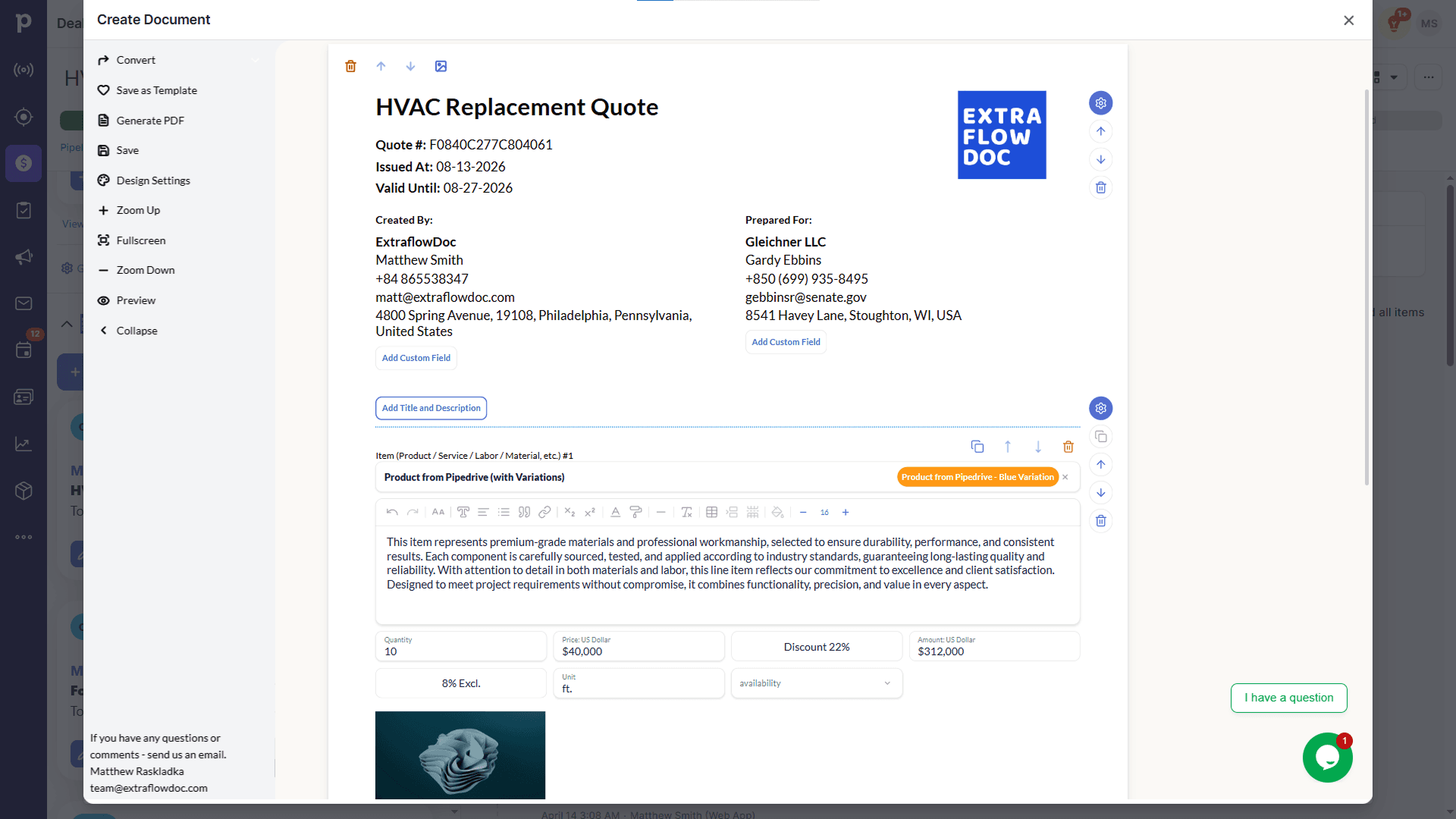
Edit blocks, pricing, and content live, then export a polished PDF that matches exactly what you built. Drag the handle to compare.
Solution
One editor produces the whole family of documents a deal needs, from the proposal that wins it to the invoice that closes it — with one set of templates and one set of pricing rules behind them.
Integrations
ExtraflowDoc installs into Pipedrive and monday.com and opens inside the record you're working on — no export, no copy-paste, no extra tab.
Build the proposal from inside the deal, with contact, product, and pricing data pulled in automatically — then send it for signature without leaving Pipedrive.

Write proposals straight from a monday.com board, with client and item data mapped in from your existing columns and the finished document stored back on the item.
Comparisons
Most proposal software is a separate app your team has to remember to open. Here's how ExtraflowDoc stacks up against the three named most often.
Proposify is a standalone proposal tool with its own editor and pipeline. See how it compares with building the proposal inside the CRM you already use.
Read the comparisonBetter Proposals sells a web-page proposal experience. Compare it against ExtraflowDoc's block editor, CRM-native data, and per-company pricing.
Read the comparisonPandaDoc is a broad document suite priced per seat. See where ExtraflowDoc's document-volume pricing and CRM-first workflow differ.
Read the comparisonProposal examples
Documents built by ExtraflowDoc customers — click any example to view it full-screen, page by page.
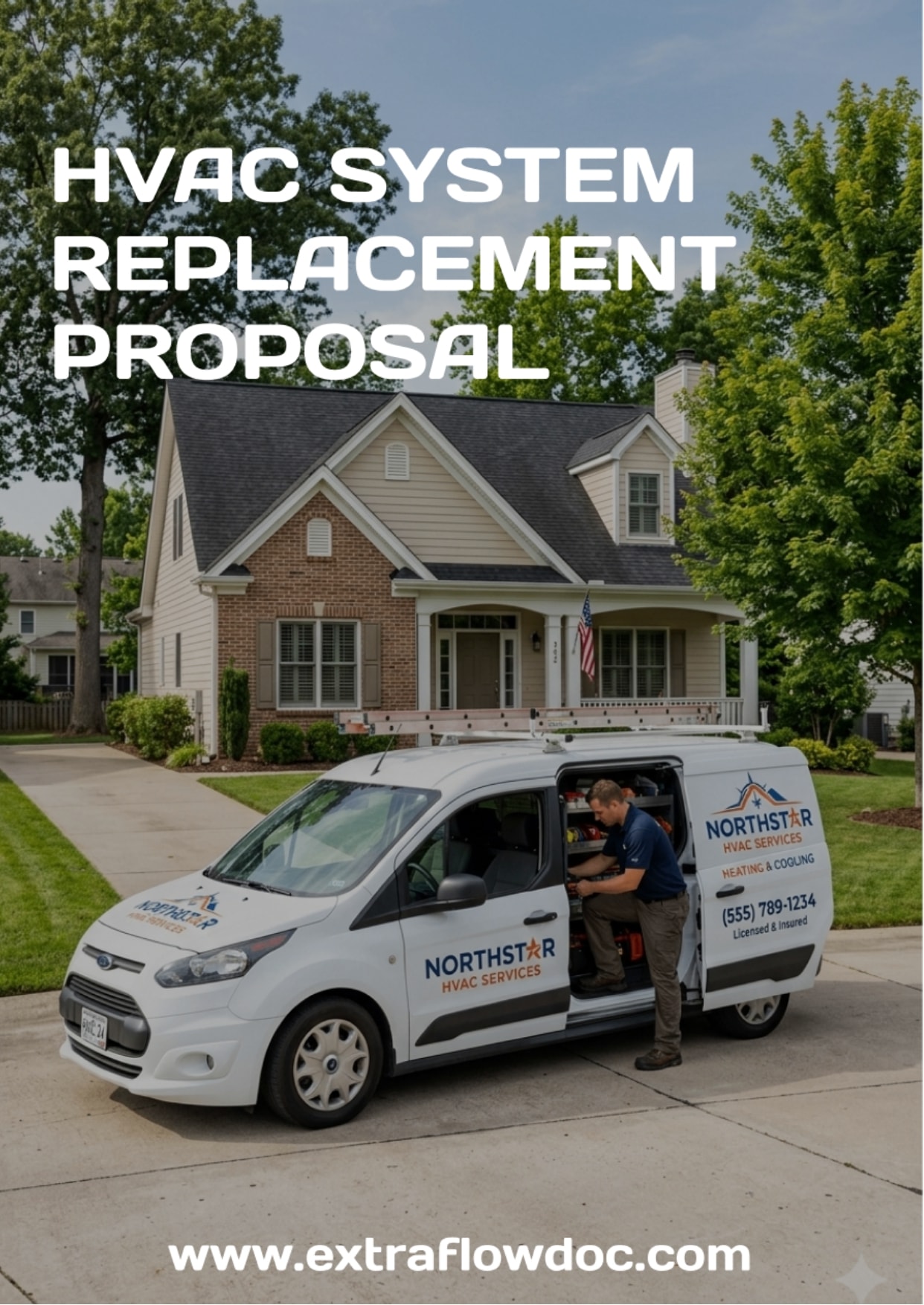
HVAC System Replacement Proposal Example
A professional HVAC system replacement proposal example with equipment.
View HVAC System Replacement Proposal example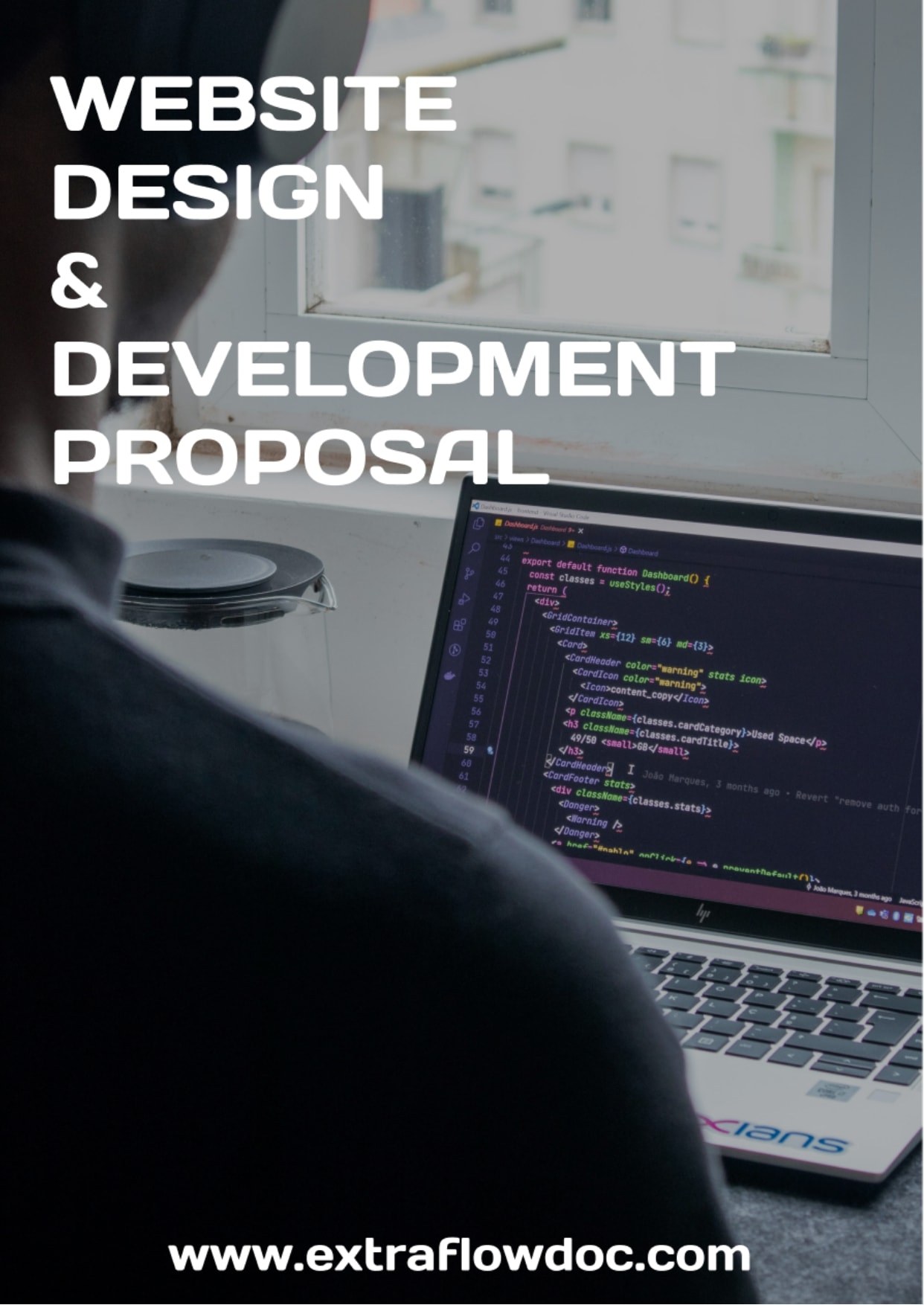
Website Design Proposal Example
A structured proposal with scope, pricing, and timeline — ready to send in minutes.
View Website Design Proposal example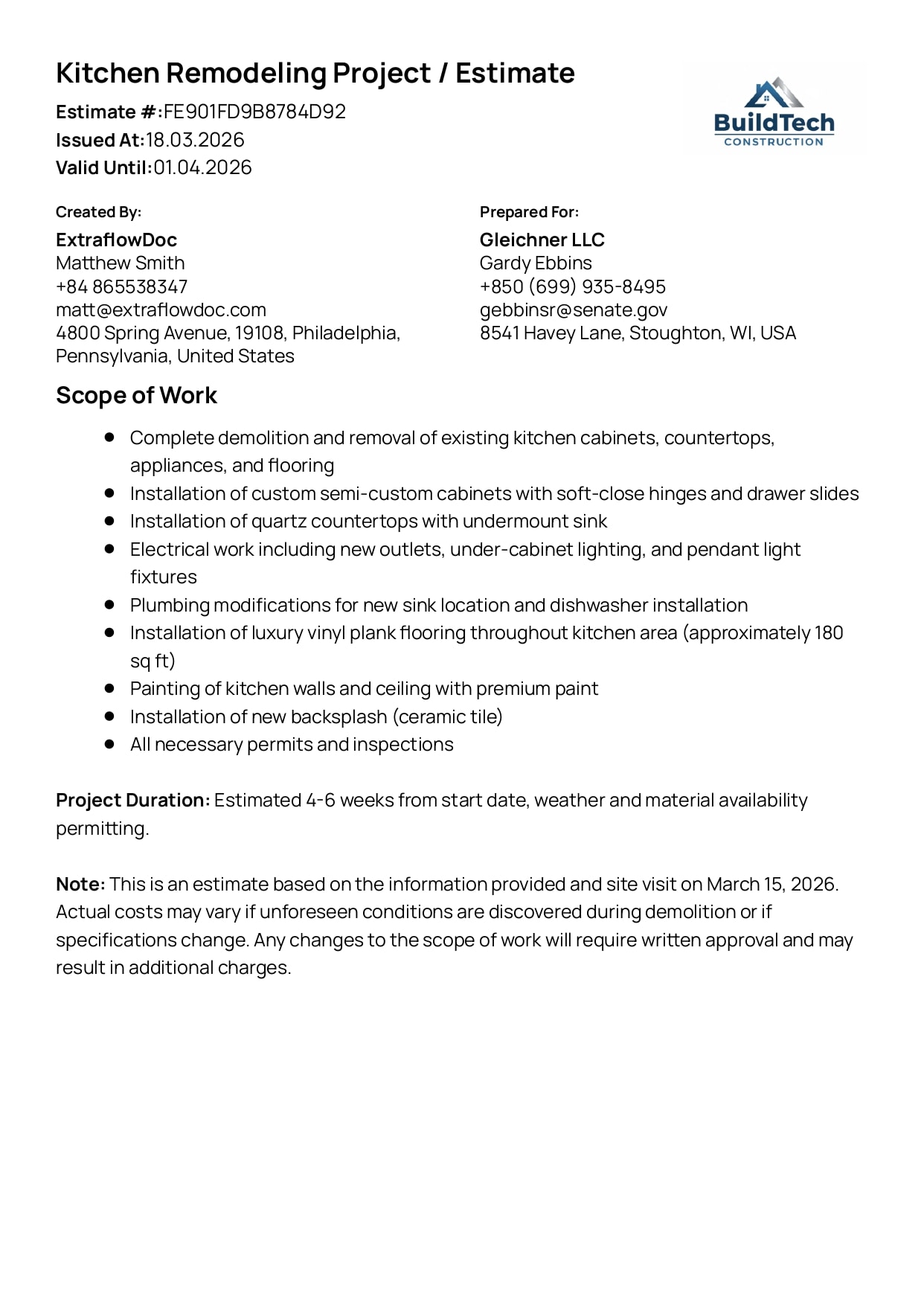
Kitchen Remodeling Project Estimate Example
Break down complex projects into transparent costs and phases your client can trust.
View Kitchen Remodeling Project Estimate example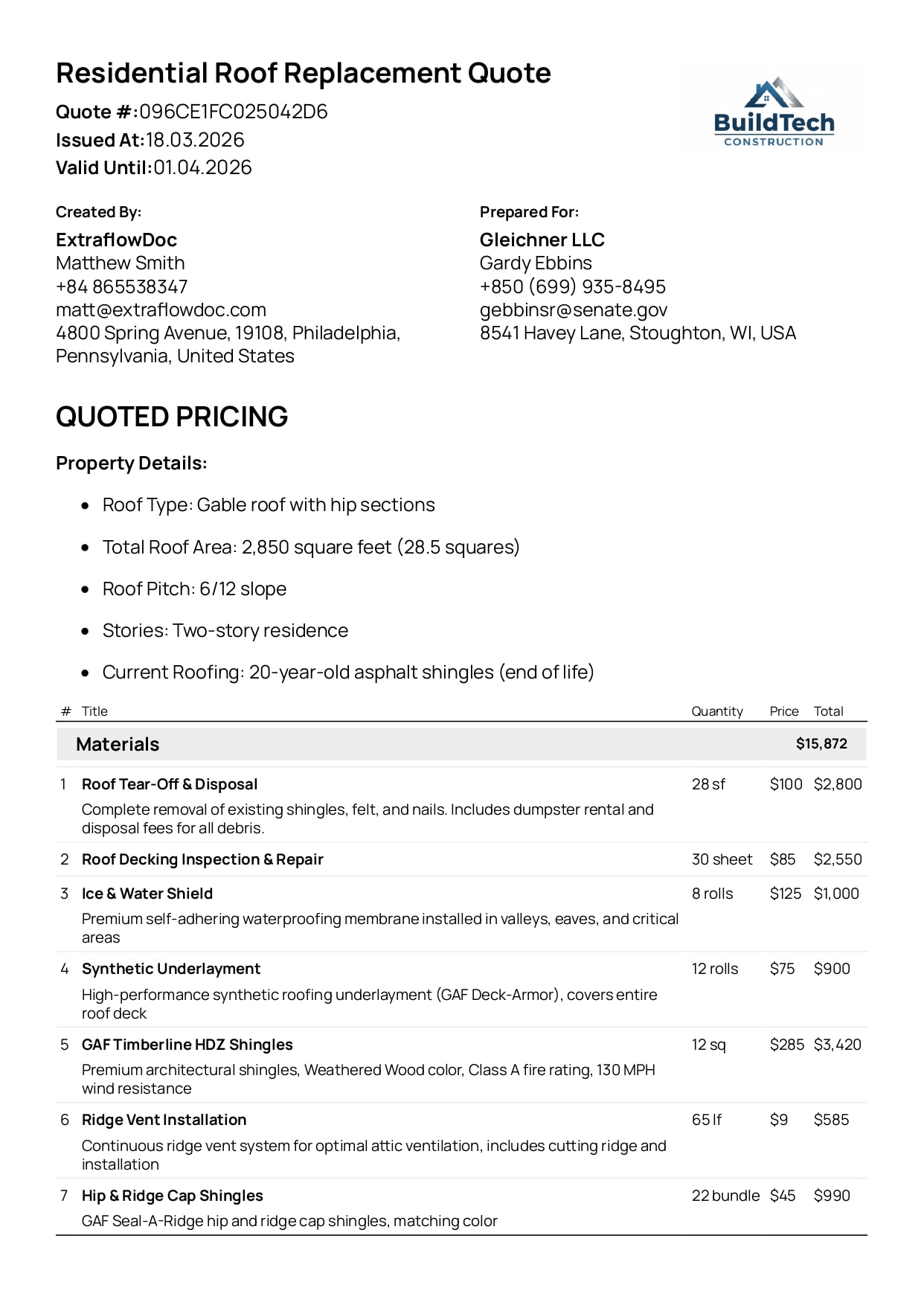
Residential Roof Replacement Quote Example
Detailed quote with materials, labour, and totals — clear for both your team and the client.
View Residential Roof Replacement Quote example
Landscaping Quote Example
A professional landscaping quote example.
View Landscaping Quote example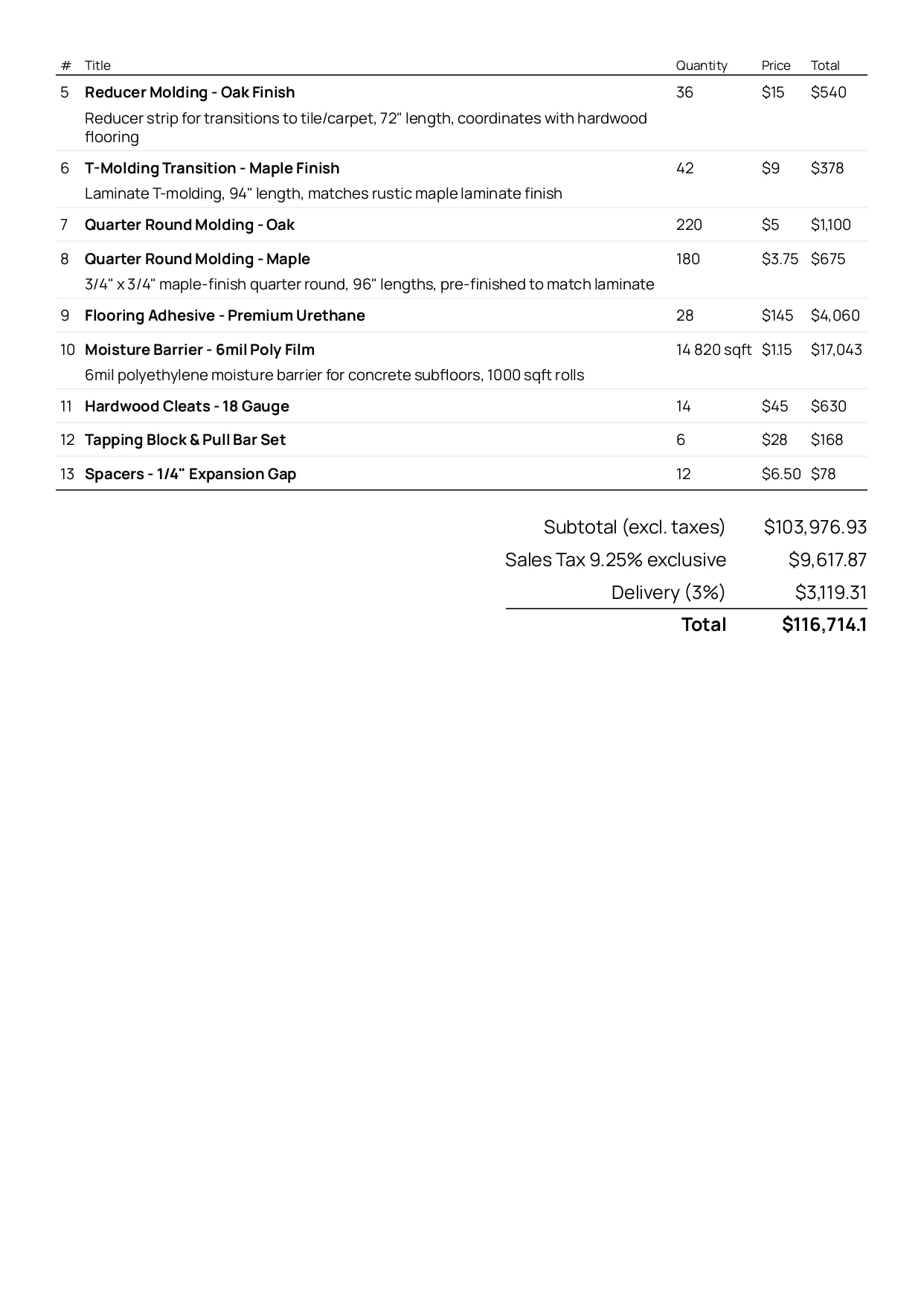
Flooring Materials Estimate Example
A professional flooring materials estimate example.
View Flooring Materials Estimate example
CNC Machinery & Equipment Quote Example
A professional CNC machinery and equipment quote example.
View CNC Machinery & Equipment Quote exampleWatch the demo
By industry
What a winning proposal contains changes completely from one trade to the next. Here's what ExtraflowDoc does for the way different businesses actually pitch.
Open with the site survey and the phased plan, show comparable builds in a gallery, then put labour, materials, plant, and subcontractors on separate priced lines the client can approve.
Pitch the programme and the trades you'll run, with a scope section per phase and a signed acceptance that pins down exactly what was agreed before the first variation arrives.
Lay out the load assessment, the equipment you're specifying and why, then the install and commissioning — so the client compares your proposal on fit, not just on the bottom line.
Attach the inspection photos to the same document as the price, spell out tear-off, materials, and warranty, and get the payment schedule signed alongside the scope.
Show the design intent with a photo gallery of finished gardens, then price planting, hard landscaping, and ongoing maintenance as options the client can choose between.
Bring your system design across from your solar design tool and wrap it in a proposal that sells it: equipment, install, timeline, and finance terms, signed in one place.
Lead with the problem statement and your approach, set out deliverables and milestones, and price by phase or retainer — a document that reads like thinking, not a rate card.
Put the strategy, the team, and the case studies in front of the fee. Save the whole structure as a template so the next pitch is an afternoon rather than a week.
Write a software development proposal with the scope, architecture approach, sprint plan, and assumptions in rich text, then price licences, build, and support as separate lines.
Turn the engagement into a clear scope-of-services proposal with tiered monthly packages, and collect a signed engagement letter from the same document.
Quote per visit, per site, or per square metre with calculated columns, and show the schedule, staffing, and specification the client is actually buying.
Build the menu and the run of day into the proposal with photos, then price packages, staffing, and day-of add-ons as options the client can pick from.
Present concept imagery, stage the work by RIBA-style phase, and price each stage separately so the client can commission the next one without a new proposal.
Detail the system design room by room, list hardware from your catalogue with margin applied, and separate supply, installation, and ongoing monitoring.
Send a proposal that looks like a studio twice your size produced it — cover page, scope, portfolio, price, signature — from a free plan, with no design tool involved.
Free tools
Need a proposal today rather than a rollout? Build one in the browser and download the PDF. Nothing to install, nothing to cancel.
Turn scope, pricing, and terms into a polished proposal that's ready to send and sign — free, in your browser.
Create ProposalBuild an itemised sales quote with live pricing, discounts, and a clear total.
Create QuoteGive clients a line-by-line cost estimate for materials and labour before the work starts.
Create EstimateBill the work once the proposal is won, with itemised lines, tax, and totals that add themselves up.
Create InvoiceRaise accurate purchase orders to suppliers with quantities, unit prices, and totals that match.
Create Purchase OrderPricing
Everyone who pitches gets access on every plan, along with every document type. Start free — upgrade only when you need more documents a month.
$0.00/month
Get started with the Free plan5 documents/month per company
$20.69/month
Get started with the Basic plan20 documents/month per company
$34.49/month
Get started with the Standard plan35 documents/month per company
Customer stories
“Very intuitive. Our team was creating professional proposals on day one with zero training.”
“Game changer for our construction business. Complex estimates that used to take hours now take 10 minutes.”
“Best ROI of any software we've purchased. Paid for itself in the first week.”
“ExtraflowDoc saved us hours every week. We send professional cleaning quotes in minutes instead of hours.”
“The Pipedrive integration is seamless. All our client data auto-fills perfectly.”
“ExtraflowDoc has been an outstanding addition to our workflow in Pipedrive. The app works seamlessly with Pipedrive, making document generation and automation incredibly smooth and easy to use. What really stands out is how much time it saves our team every single day. Honestly, the app quickly pays for itself just through its efficiency. If you use Pipedrive and want to streamline your document process, improve efficiency, and save valuable time, I highly recommend ExtraflowDoc.”
FAQ
What proposal software is, what a proposal should contain, and where ExtraflowDoc fits.
Proposal software is a tool for building, sending, and tracking the document you use to win work — not just the price, but the cover page, the scope, the proof, the terms, and the signature. Instead of assembling it from a Word file and a PDF export, you build it from reusable blocks, send it as a link or PDF, and see when the client opens and signs it. ExtraflowDoc does that inside the CRM your team already uses.
You start from a template or a blank document, the client's details fill in from your CRM record, and you build the proposal from blocks: cover page, rich text for scope and approach, photo galleries, pricing tables, and a signature block. Totals and taxes calculate themselves. You then share a secure link or export a PDF, send it for e-signature, and track its status until it's signed.
At minimum: who it's for and what problem it solves, what you will actually do, what it costs and on what terms, why you're credible, and a way to say yes. The order matters — a price with no scope in front of it invites a discount request. ExtraflowDoc's block editor exists so you can put the scope, the evidence, and the number in that order every time.
An estimate is an approximate cost given before the work is fully scoped. A quote is a firm, itemised price the client can accept as-is. A proposal wraps that price in scope, approach, and terms — it sells the work, not just the number. ExtraflowDoc produces all three from the same editor, so an estimate can become a firm proposal without being rebuilt.
Because those tools make a document, not a process. They don't pull client data from your CRM, don't recalculate a total when you change a line, don't tell you when the client opened page four, and don't collect a signature. You also end up with fifteen slightly different versions of the same proposal across your team's laptops.
Five things: it connects to where your customer data already lives; it produces a document you'd put your logo on without redesigning it; it handles pricing properly rather than as static text; it collects a signature without a second subscription; and it doesn't price per seat so the whole team can use it. ExtraflowDoc was built against that list — CRM-native, block-based, with e-signatures included and per-company pricing.
Yes. ExtraflowDoc has a free plan covering 5 documents a month per company with unlimited users, plus a free browser proposal generator that needs no sign-up at all. Paid plans start at $20.69/month when you outgrow the free quota.
Most proposal tools charge per user per month, which gets expensive as soon as everyone who pitches needs access. ExtraflowDoc charges per company by document volume instead: free for 5 documents a month, $20.69/month for 20, up to 600 a month — with unlimited users on every plan.
You can follow each document's status as it moves from sent to viewed to signed, so you know whether to follow up or wait. ExtraflowDoc tracks document status and signature progress; it does not do page-by-page heatmaps or time-on-page analytics, which some dedicated proposal tools sell separately.
Yes, and without a separate e-signature tool. Send the proposal for signature from inside the document, verify the signer, and keep the audit trail with the signed PDF. Status updates in real time so you know the moment it's accepted.
That's the point of templates. Save any proposal — cover page, scope sections, pricing structure, terms — and start the next one from it. Every rep then works from the same approved structure instead of hunting for last quarter's best version.
In the sense that matters day to day: client and product data populate themselves from the CRM, pricing and totals calculate themselves, templates remove the blank page, and signature requests and status updates happen from inside the document. It is not a rules engine that assembles a proposal with no human involvement — a person still decides what to say.
Yes. Lay out good/better/best packages or optional add-on lines in the pricing table, with totals for each, so the conversation becomes which option rather than whether to buy. Tiered pricing and volume discounts apply automatically as quantities change.
ExtraflowDoc integrates natively with Pipedrive and monday.com, opening inside the deal or board item you're working on. If your CRM is something else, the free browser generators still work, but the data autofill that makes this fast is Pipedrive- and monday.com-only today.
Partly, and it's worth being precise. If proposal management means templates, brand control, reusable content, version history, and status tracking across everything your team sends, then yes. If it means an enterprise bid desk — RFP libraries, formal approval chains, compliance matrices, assigned subject-matter experts — then no, and a dedicated bid-management suite will fit better.
No. RFP response software maintains a searchable answer library and routes questionnaire sections to subject-matter experts for sign-off. ExtraflowDoc doesn't do that. It's for proposals you author and design yourself, so you'd use it for the proposal a buyer asked you to send, not for filling in a 300-question procurement questionnaire.
ExtraflowDoc is used for construction proposals because a build proposal needs more than a price: a phased scope the client can follow, site photos attached to the same document, separate priced lines for labour, materials, plant, and subcontractors, and a signed acceptance that fixes what was agreed before variations start.
Yes, and it's one of the closest fits. Consulting and agency proposals win on the problem statement, the approach, the team, and the case studies — all rich text and image blocks — with the fee structured by phase or retainer at the end. Save the winning shape as a template and the next pitch takes an afternoon.
Not in the specialist sense. Solar proposal tools like Aurora Solar or OpenSolar model the roof, run shading analysis, and estimate production — ExtraflowDoc does none of that. What it does is turn a design you've already produced into a proposal that sells it: equipment, installation, timeline, finance terms, and a signature, in one branded document.
Not as a downloadable template file, no. ExtraflowDoc is the tool you build one in — the scope, architecture approach, sprint plan, and assumptions as rich text, with licences, build, and support as separate priced lines. The closest worked example on this site is the website design proposal example, and the document examples page has more.
Open-source proposal tools exist, and they can work if you have the engineering time to host, secure, update, and support them. ExtraflowDoc is not open source — it's a hosted product with a free plan, so you get the zero-licence-cost starting point without running a server yourself.
Yes. Taxes are applied per line item, so mixed-rate proposals work, and you pick the currency and number format the client pays in. ExtraflowDoc is localised into 30 languages, so the proposal reads correctly in your client's market as well as yours.
Yes to both. ExtraflowDoc is cloud-based and runs in any modern browser — macOS, Windows, iPad, or Android — with nothing to install beyond the Pipedrive or monday.com app itself.
Minutes, not a project. Install the app in Pipedrive or monday.com, open a deal, and start a document — client data is already there. Building your first reusable proposal template takes an afternoon at most, and there's no onboarding call to schedule.
Ready to win more work?


